
Bespoke CRM and business management software
Keep client records, enquiries and next actions in a system shaped around your team. A bespoke CRM can make ownership clear and connect the sales process to the tasks and documents needed to move work forward.
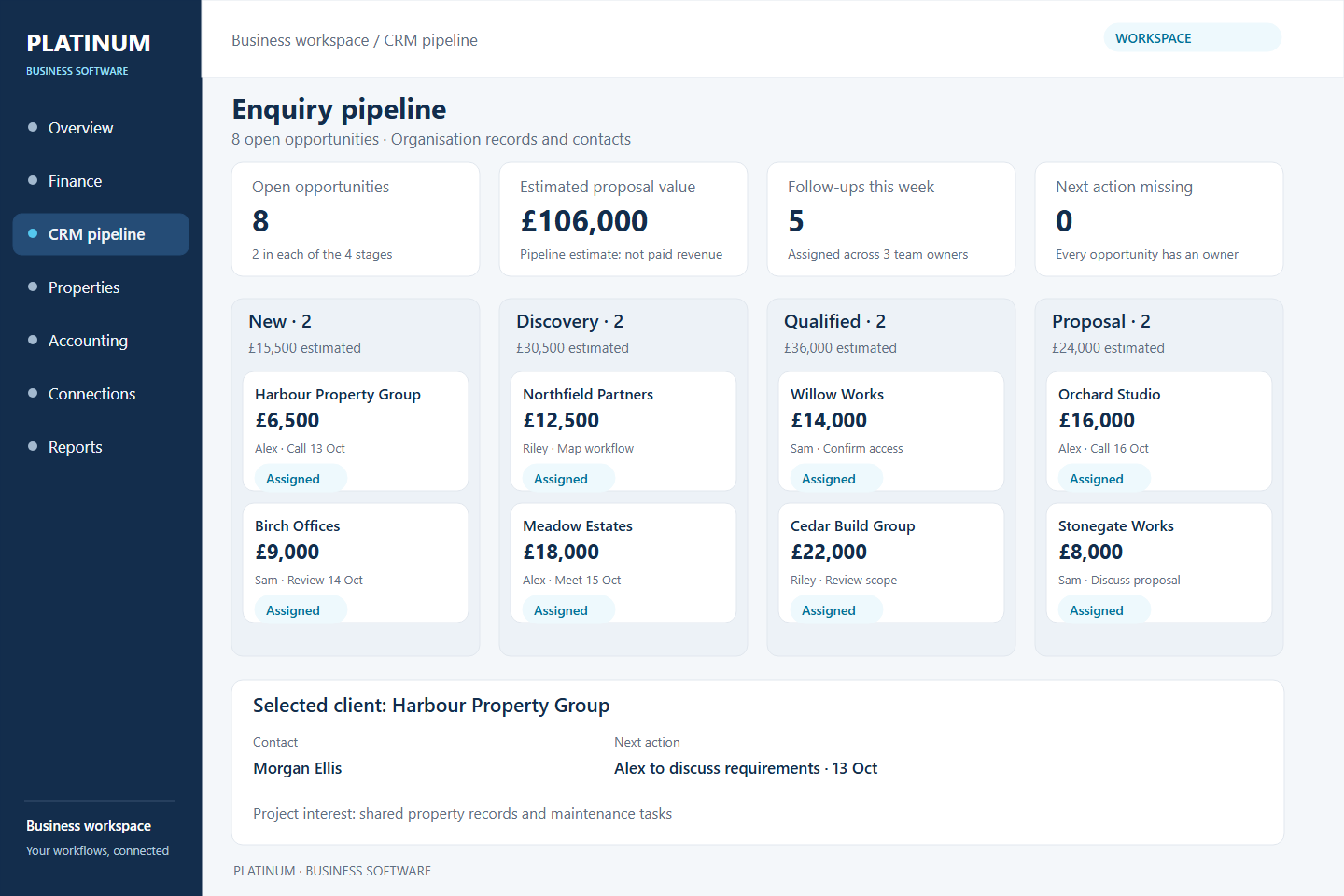
Give every enquiry an owner and a next step
When contacts live across inboxes and spreadsheets, it is difficult to know who is following up. A shared client record can hold the current stage, responsible colleague and next action, with access tailored to each person's role.
- Contact and organisation records with useful search and duplicate checks.
- Sales pipelines using your actual qualification and proposal stages.
- Follow-up dates, shared tasks and overdue-work views.
- Links to documents and correspondence with appropriate access rules.
- Activity history and reports that distinguish enquiries from completed work.
Move from enquiry to proposal
A new enquiry is assigned to a colleague, who records the discovery discussion and schedules the next call. The opportunity moves to a proposal stage when it meets your agreed criteria. Everyone with permission can see the owner and next action; an estimated proposal value is kept distinct from won work or paid revenue.
Fit your process before adding features
An existing CRM may already meet your needs. Bespoke work can be useful where the standard stages, permissions or connections do not fit. We assess whether configuring your current product, extending it or building a focused system offers the most practical route.
Questions to bring to discovery
- Which stages does an enquiry pass through?
- Who can view, edit, assign or export records?
- How are follow-ups scheduled and handed over?
- Which spreadsheets or CRM tools are already in use?
- What do managers need to report, and over which period?
Connect without promising a two-way mailbox
Email, calendar and document connections depend on approved provider access and the agreed scope. Sending an email is different from automatically synchronising received replies. We specify what a connection actually does, how permissions are managed and what staff must still record manually. Wider connections can form part of workflow automation.